How Sooning is Now? Broken bridge built back stronger
Sooning Street Bridge on Magnetic Island has long provided a simple but vital service for the community, keeping it connected and functioning.
Originally built in 1962, the bridge has supported Nelly Bay residents and visitors for more than 60 years, and for the majority of that time it held up against the weight of Mother Nature.
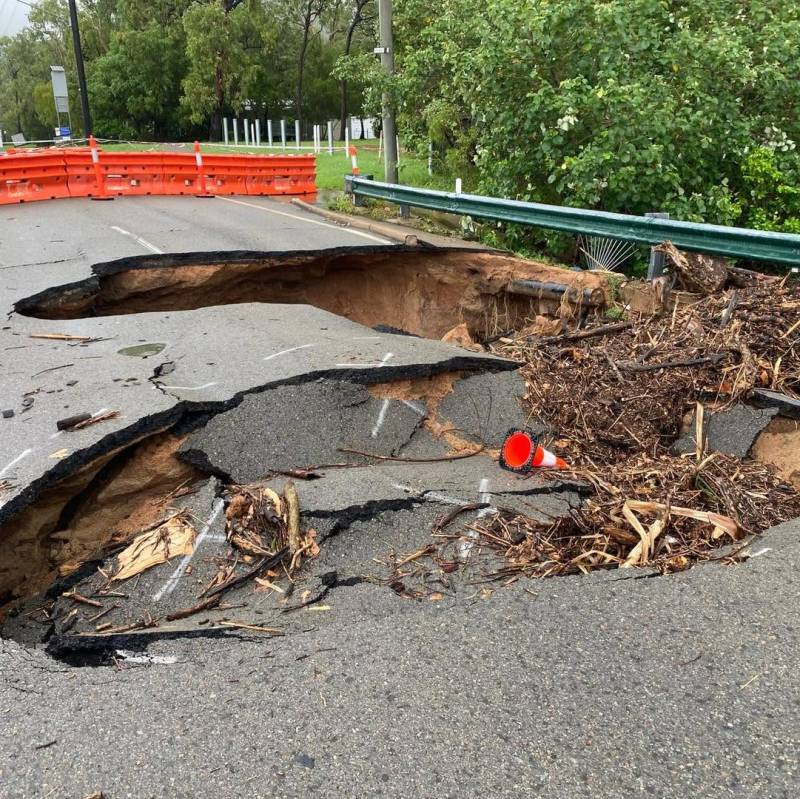
However, repeated severe weather events during the 2024-25 disaster season proved to be the literal breaking point for the bridge.
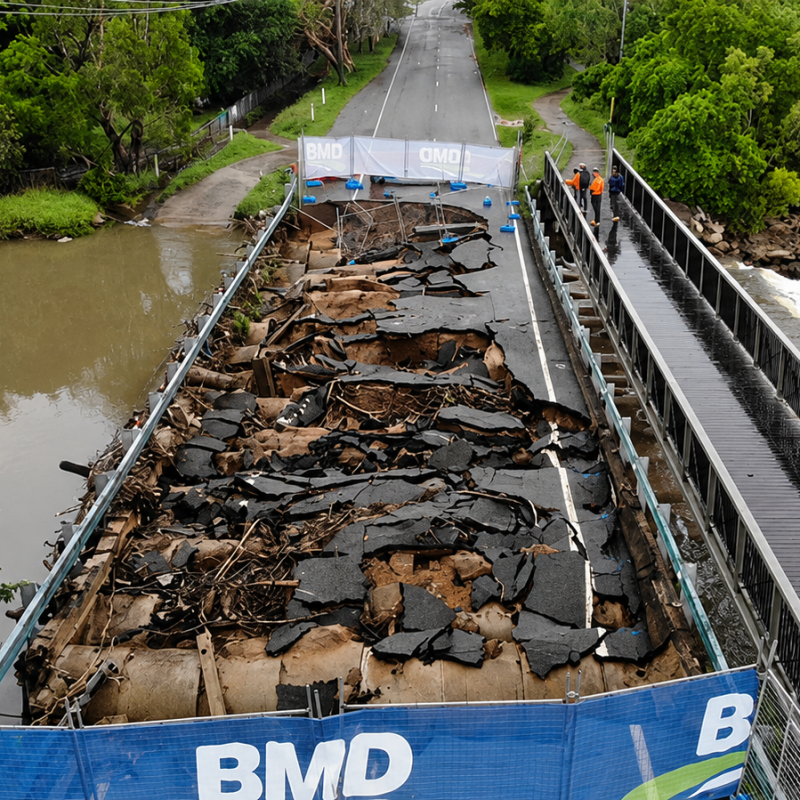
Heavy rainfall and raging floodwaters in late December 2024 cracked and damaged the underlying culvert and pipes, before torrential rain and flooding in early 2025 destroyed the structure completely.
For an island community like Maggie, a broken bridge isn't just an inconvenience, it's a chokepoint.
Sooning Street’s closure meant delays, long detours, and reduced access for residents, schools, businesses and emergency services.
However, help was at hand from the Australian and Queensland Governments, with assistance for reconstruction provided to Townsville City Council through the joint Commonwealth-state Disaster Recovery Funding Arrangements (DRFA).
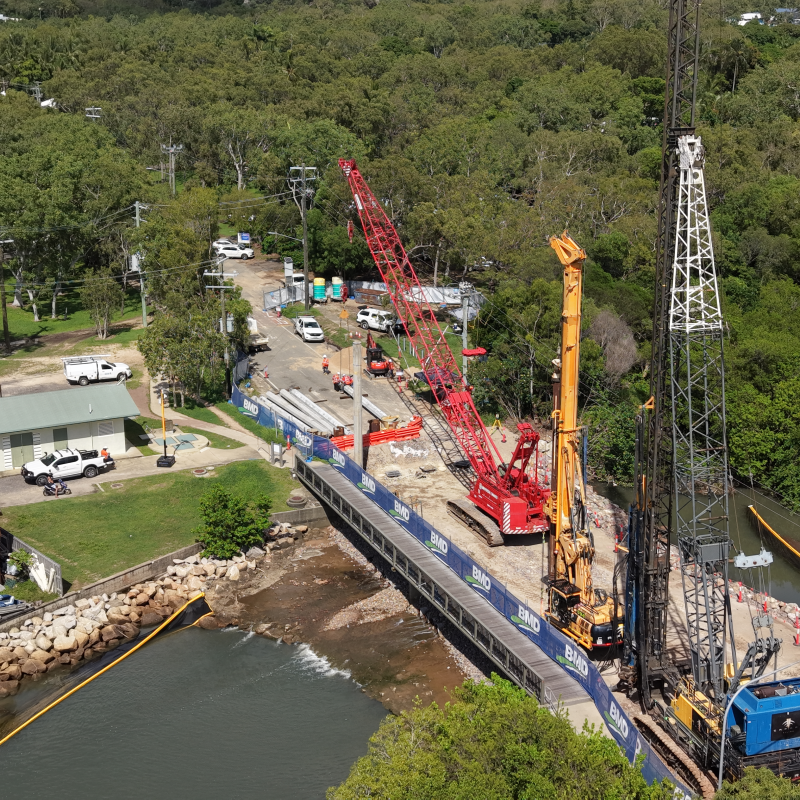
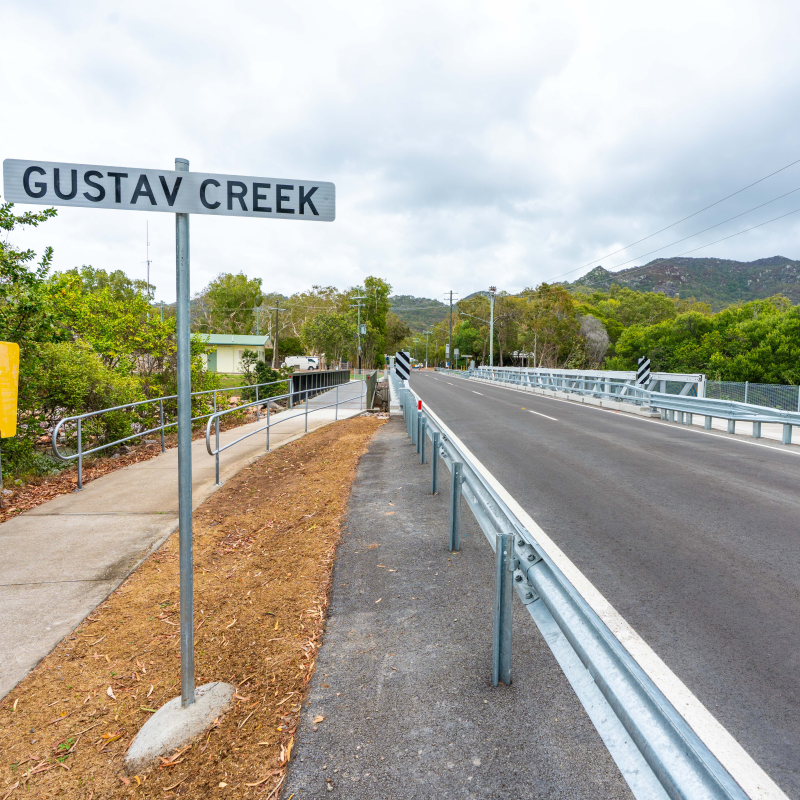
Council engaged contractors BMD to build a new crossing over Gustav Creek, but this was no simple replacement.
The 18-month project provided a chance to re-engineer the crossing for the conditions it will face in future, ensuring it has the strength to withstand volatile weather systems while maintaining a safe and reliable transport route for the community.
Building a new 38-metre bridge to modern standards required significant resources, and the numbers behind the project tell that story:
- 1,430 tonnes of concrete, including piles and deck beams
- 624 tonnes of locally sourced ready-mix concrete
- 579 tonnes of precast deck units and 228 tonnes of precast piles
- 340 linear metres of concrete piles driven into the creek bed
- 128 tonnes of reinforced steel across the structure, formed elements and fixtures
- 360 tonnes of asphalt for the road surface
Acknowledging Magnetic Island's unique ecosystem and the reef waters it feeds into, the finished structure also incorporates fishways to allow marine life to continue moving through Gustav Creek undisturbed by the bridge above.
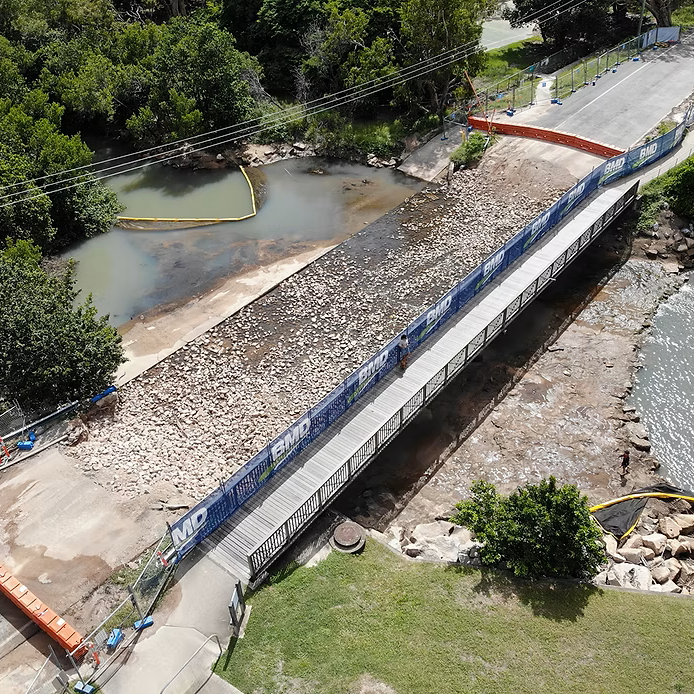
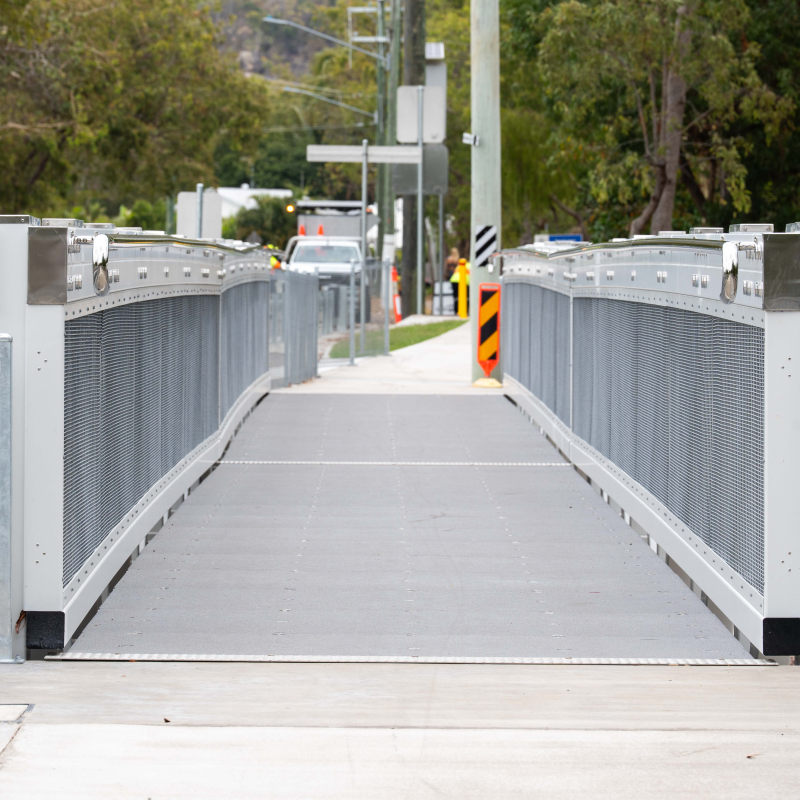
Additionally, a new footbridge delivered as part of the project gives pedestrians, including Magnetic Island State School students, a safer, separated route.
Rather than steel and timber, the footbridge uses 14 tonnes of composite non-corrosive materials developed by Queensland's Wagners Composite Fibre Technologies.
This lighter, longer-lasting structure represents innovation built into a disaster recovery project, replacing what would otherwise have been 53 tonnes of conventional materials.
The $20 million government investment in the bridge reflects both the technical demands of building over an environmentally sensitive waterway and the priority placed on getting it right for local residents.
With the new bridge now open Nelly Bay's main transport link has been restored, improving access on Magnetic Island and making the community more resilient to severe weather.