Key connector’s scars now healed
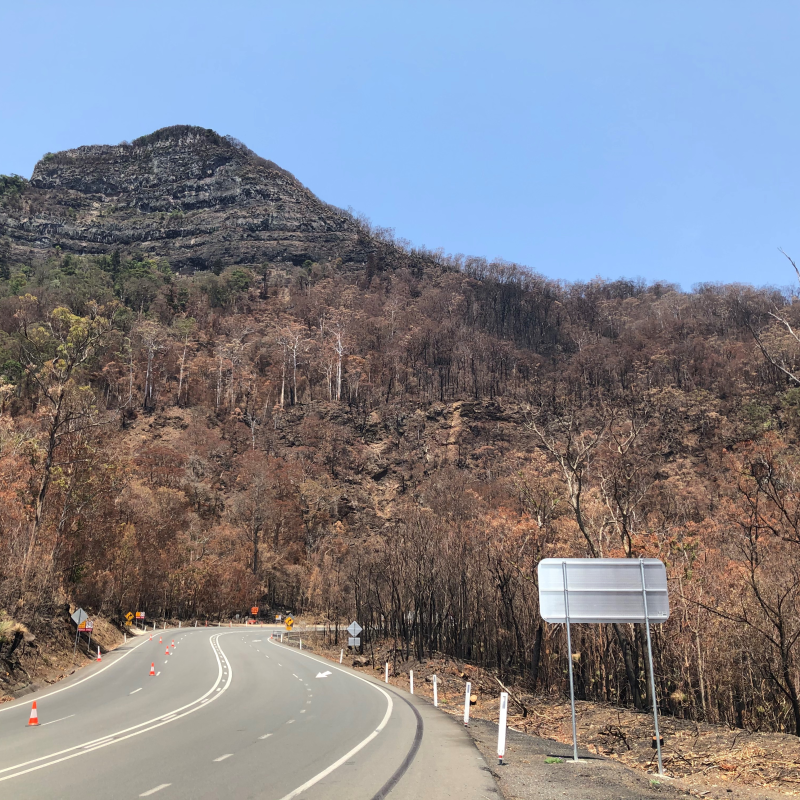
Devastating bushfires in 2019 severely scarred one of Queensland's most important mountain passes.
Cunninghams Gap, the gateway to the Southern Downs, is no ordinary road.
It’s a critical national freight route linking southern Queensland rural communities with the major centres of Ipswich and Brisbane.
But extensive damage from the 2019 bushfire disaster left a two-kilometre section of the road facing a complex reconstruction.
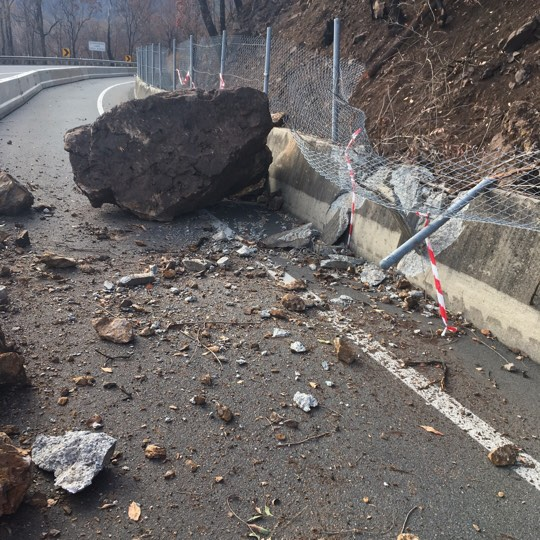
Steep slopes became unstable, and rockfalls, while occasional, were still a constant concern.
However, keeping the Gap open for traffic was non-negotiable, and thanks to careful planning from Queensland’s Department of Transport and Main Roads (TMR) Cunninghams Gap never closed while the work continued.
Top of mind during the many months of planning before works got underway was the question: How do you tame a mountain that sheds its rocks?
TMR’s innovative solution involved building a defence in layers:
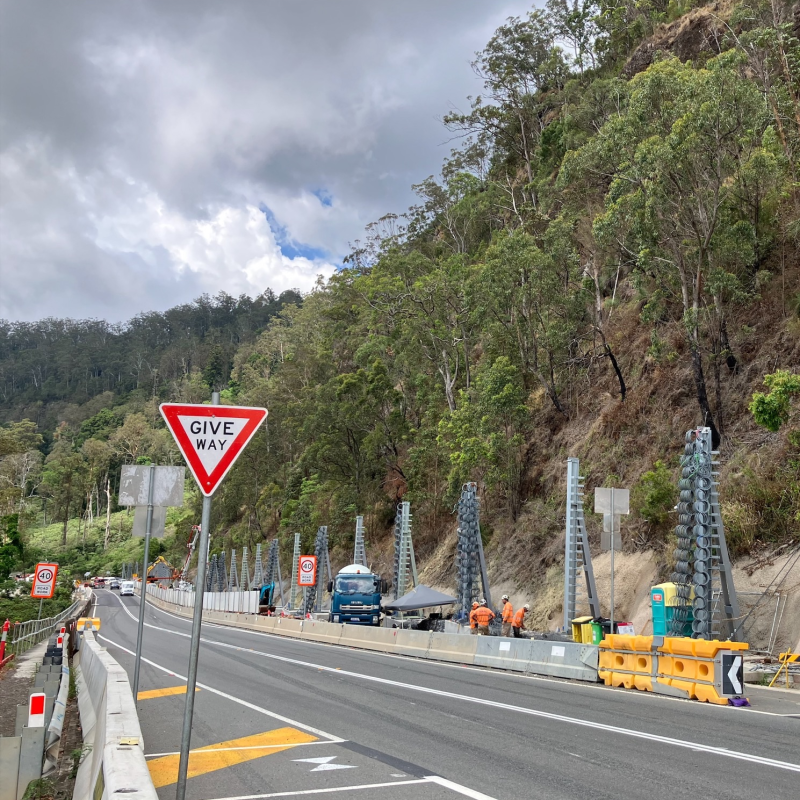
- A one-kilometre rockfall fence, almost seven metres tall, to catch falling debris before it reaches the road.
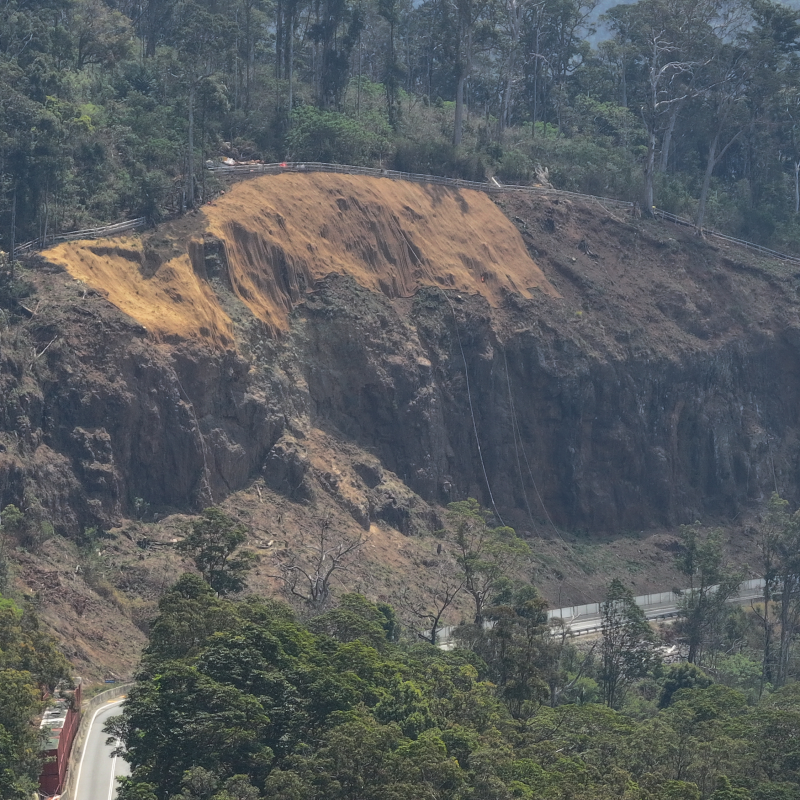
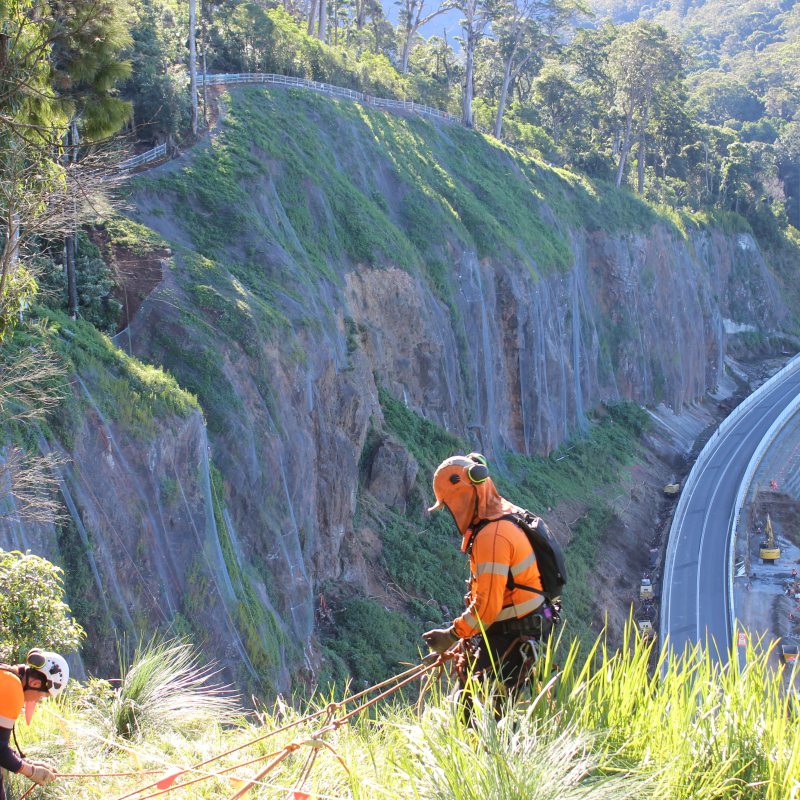
- About 20,000 square metres of drape mesh to blanket the slopes above.
- More than 1,200 cubic metres of shotcrete sprayed onto rockfaces.
- Over 1,300 soil nails and rock anchors grouted deep into the mountainside.
- Seven retaining walls built below the eastbound lane so the fence could stand at road level.
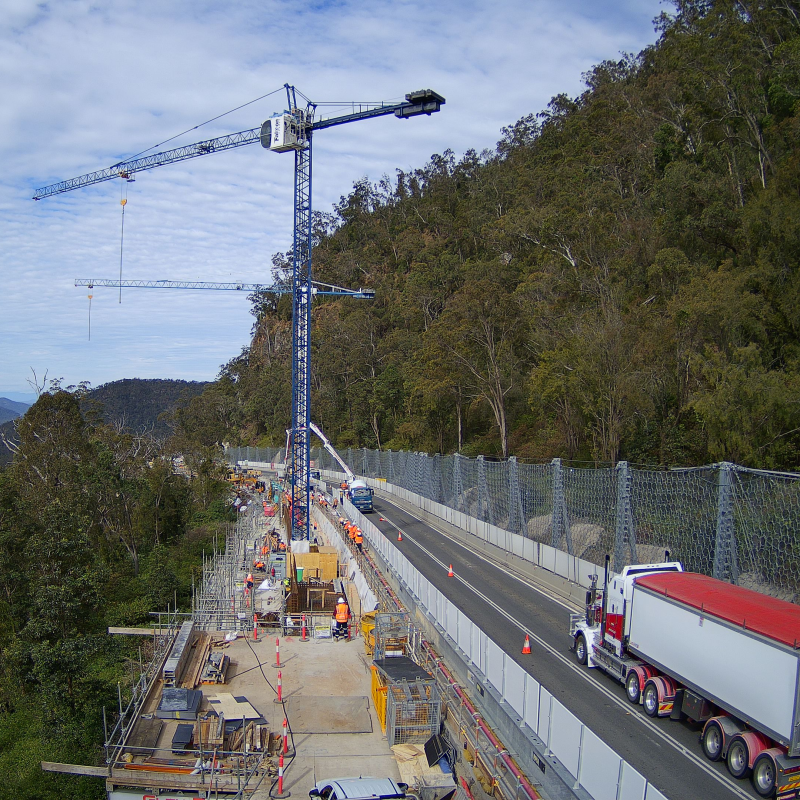
From October 2023, crews worked in the narrow confines of the Gondwana Rainforests World Heritage Area and, with almost no room to spare, built upward.
This vertical approach, rarely seen on Queensland road projects, saw five tower cranes raise two of seven retaining walls that let crews work safely in tight terrain and reduced the need for long lane closures.
Helicopters were used to reach areas inaccessible to the cranes, with more than 90 heli-lifts carrying materials to the worksite.
During the works, a close partnership with the Queensland Trucking Association (QTA) saw 21 heavy vehicle safety videos released on the TMR and QTA YouTube channels to help freight operators navigate the corridor.
Completing this landmark reconstruction project took almost three years of painstaking work, but over the period TMR managed to keep at least one lane of the highway open at all times.
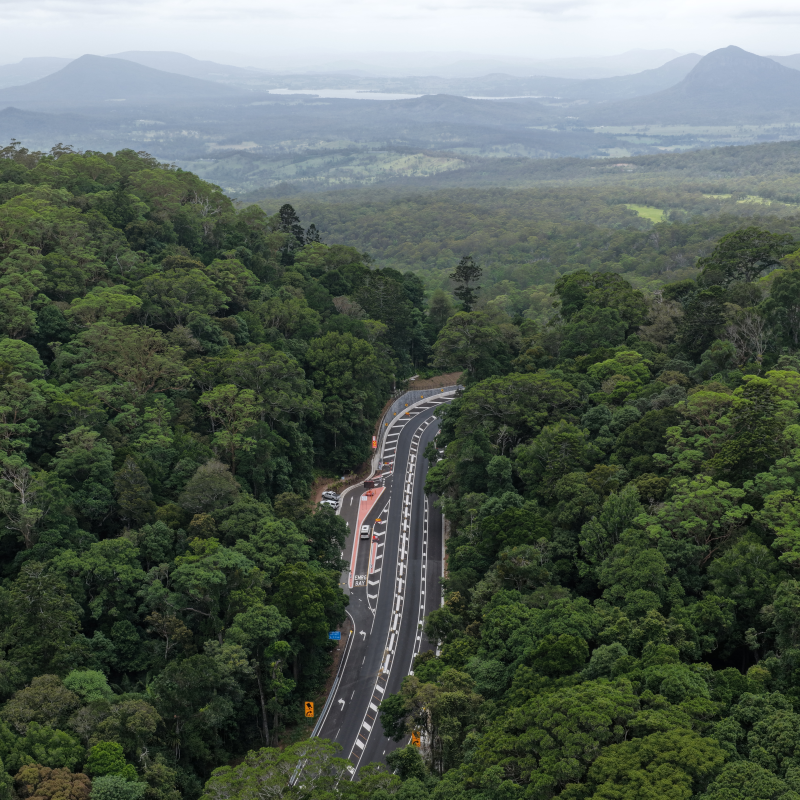
Improvements include two new emergency bays at the Crest Carpark, greater access across Gap Creek Bridge for emergency teams to reach broken-down vehicles, restored pavement east of the Gap Creek Bridge, and five CCTV cameras monitoring slope stability, road hazards and traffic conditions.
Since the road's full reopening, drivers are also noticing the difference around the final bend below the crest near the Allan Cunningham Monument where heavy vehicle breakdowns once caused regular havoc.
TMR has lowered the steepness of the gradient at this section to allow for a smoother turn and fewer breakdowns.
Jointly funded by the Australian and Queensland Governments through the Disaster Recovery Funding Arrangements (DRFA), the Cunninghams Gap bushfire recovery project has created a better, safer driving experience along this vital transport route, and will reduce the likelihood of severe weather impacts in the years ahead.